02 July 2006

Tequila goes upscale with premium brands

La Cofradia Distillery

New trend finds partygoers switching from body shots to sipping cocktails

by DAVID AGREN

Jose Hermosillo, owner of Casa Noble Tequila, pours shots of añejo tequila into snifter glasses sitting on a bar at his company’s 24-hecatre compound in Tequila, Mexico. But no one dares throw back the triple-distilled spirit quickly – a 750 millilitre bottle sells for $80. Smooth and complex, with an interesting nose and an almost buttery texture, it comes in a hand-painted porcelain bottle adorned with 18-karat gold detailing.

Once a beverage associated with Mexican holidays, booze-fuelled debauchery and nasty hangovers, Mexico’s best-known export has increasingly moved upscale, finding a spot on the top shelves of liquor cabinets and commanding steep prices from discerning connoisseurs, who often sip ultra premium tequilas like they would a fine scotch whisky or bourbon.

Casa Noble now exports all over the world, finding enthusiasts in countries as diverse as Australia, Japan, South Africa, the United Kingdom and Russia, where Hermosillo says young people, flush with cash and an appetite for something other than vodka, are fuelling a premium tequila boom. The demand, however, is especially strong in Canada and the United States.

While industry giants like Jose Cuervo and Sauza have long distilled premium products, their best reservas and reposados received little fanfare until recently, joining a slew of export-only tequilas from craft distillers. The enormous popularity of premium tequila has even drawn celebrities into the business. Van Halen front man Sammy Hagar launched the Cabo Wabo brand, and actor Dan Aykroyd scooped up the Canadian rights to Patron Tequila.

Knock-offs have arrived on store shelves, too. A Southern California company now distils a tequila-like beverage from U.S.-grown agaves, initially selling it under the name "Temequila" – a word play on the town where the beverage is bottled.

"Tequila is taking advantage of the trend in the spirits industry that people want to drink better liquor," says David Ozgo, an economist with the Distilled Spirits Council of the United States.

Drinking better often means paying more, but consumers seem more than willing to spend big on tequila. Growth in the top end of the tequila market is expected to outpace sales for regular tequilas for the rest of the decade – consumption jumped by a staggering 29 per cent in 2004.

Several factors, both intentional and serendipitous, have propelled premium tequila’s popularity. According to Bertha Becerra, spokeswoman for the Guadalajara-based Tequila Regulatory Council (CRT), manufacturers began distilling better beverages, investing in new technologies and improving production techniques. Firms also marketed their products more effectively, leveraging tequila’s appellation of origin distinction, which imbues it with a certain cachet – similar to luxury drinks like cognac and champagne (by law, tequila must be made from blue agave plants grown in Jalisco, and designated municipalities in Guanajuato, Michoacan, Nayarit and Tamaulipas states).

With the prices of mid-range tequilas falling due to a surplus of agave plants – tequila’s principal ingredient – Mexico’s famed firewater is favourably competing against longtime cocktail standbys like rum and vodka.

To conquer new markets, the CRT recently authorized the production of flavoured tequilas, and created a new category for extra-aged tequila. Before the rule changes, añejo tequila only needed to rest for one year. Relatively young tequilas were lumped in with beverages spending nearly five years in a barrel.

Small but important details differentiate premium tequilas from their mass-market counterparts. Many premium distillers, like Casa Noble, grow their own agaves without the use of chemicals, steam roast the agave hearts in stone ovens and naturally ferment the agave juice.

During the distillation, Casa Noble discards the "heads and tails" – the first and last parts of the batch. The practice, along with triple distilling, supposedly reduces the levels of hangover-inducing methanol and other unpleasant elements. The final product rests in barrels made from new wood for just under five years (many distillers use old whisky barrels for aging tequila).

While some whiskies spend more than 20 years in a barrel, Hermosillo says five years is ample time.

"After a certain period of time, you lose a lot of the properties of the agaves… and the properties of the barrel take over."

Ultimately, Hermosillo says, "If you combine all these complexities, you’ll get a great spirit – not just a great tequila."

And, while premium tequila would make a great margarita, save it for sipping. "It’s not for mixing," he says.

From FFWD (Calgary)

30 June 2006

VIEWPOINT: Economic turbulence ahead?


ANALYSIS from the Guadalajara Reporter

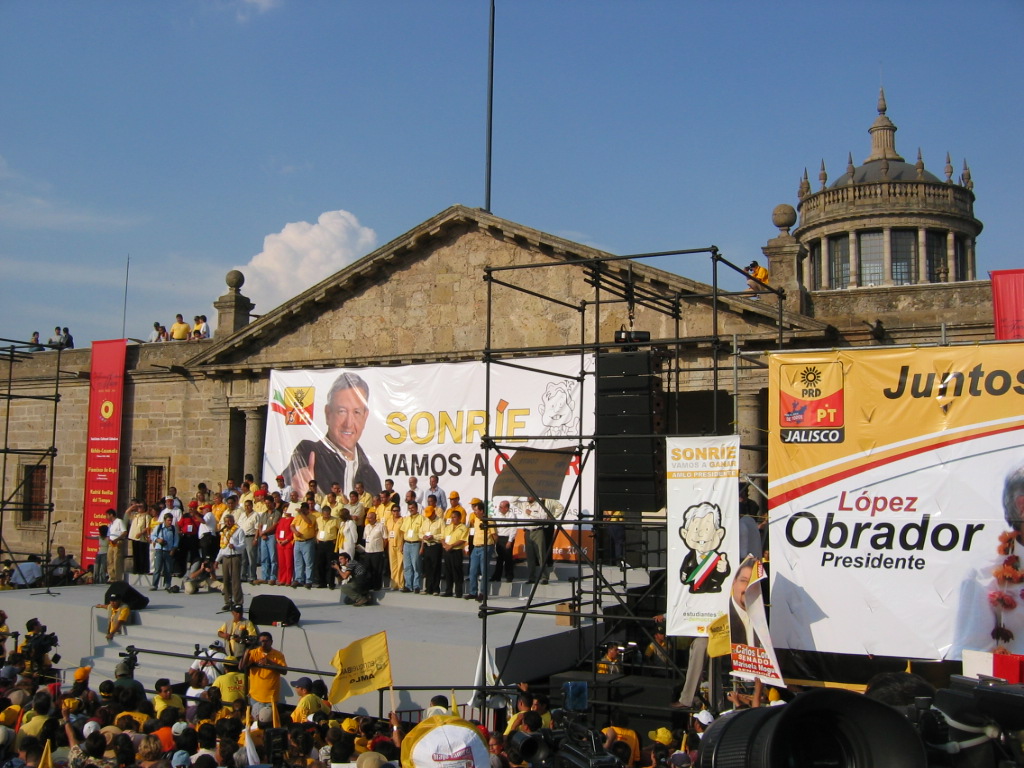
Democratic Revolution Party (PRD) candidate Andres Manuel Lopez Obrador closed the Jalisco portion of his campaign last Saturday in front of an overflow crowd of at least 10,000 supporters clad in yellow and green (the latter being fans who watched Mexico's World Cup match earlier that afternoon) – an audience estimated to be five times larger than his predecessor Cuauhtemoc Cardenas attracted in 2000 for a similar event. The PRD aspirant outlined his economic platform, which emphasizes subsidies to poor households, price supports and massive investments in refineries for Pemex and bullet trains from Mexico city to the hinterlands – all without raising taxes. Above all, though, it represented a departure from the macroeconomic path charted by presidents Fox and Zedillo.

"We don't have to put the country in debt or raise taxes," he told the crowd.

"To say this is populism is an exaggeration."

The proposals drew rave reviews from the sympathetic audience, but jeers from many analysts, who compared it to something out of the 1970s, a decade of economic turbulence in Mexico.

"His economic program is just funny money," said George Grayson, a government professor at the College of William and Mary in Virginia, who penned a book on Lopez Obrador titled: "Mesias Mexicano" (Mexican Messiah).

"His 50 promises could have been [former president Luis] Echeverria's platform 30 years ago."

Echeverria, who governed from 1970-1976, castigated business owners and implemented spending programs that led to a sharp peso crash and high inflation. President Vicente Fox has been perceived as not having implemented change in Mexico, but interest rates and inflation are both at seldom-seen low levels and economic growth has recently accelerated. The jobless rate remains stubbornly high, however, and many Mexicans don't have bank accounts or jobs in the formal economy and are thus unable to use financial instruments that would allow them to take advantage of the stable macroeconomic climate.

Mural columnist Sergio Sarmiento was also among the skeptics of Lopez Obrador's proposals, especially the PRD plan to boost incomes of families earning less than 9,000 pesos per month by 20 percent. He politely pointed out, "The last time we had something like this was in 1982, when [former president] Jose Lopez Portillo ordered a 30 percent increase in salaries, which produced a subsequent economic collapse."

The Federal Electricity Commission (CFE) released figures to the El Economista newspaper that estimated a 10 percent cut in power prices – something the PRD promises to do - would cost two billion pesos. Pemex, which remits more than 60 percent of its earnings to the federal government, lacks funds to build new infrastructure – something Lopez Obrador wants to see happen without private-sector participation.

"The era of privatization is over," he said last Saturday.

Lopez Obrador intends to finance the spending by improving tax collection – in a country where tax evasion is rife – and slashing the cost of government. The latter proposal could prove difficult as many public-sector unions now support the PRD instead of the Institutional Revolutionary Party (PRI).

Bernardo de Leon, an architect in Guadalajara, bought into the PRD proposals, saying, "I live well, but I'm not scared at all.

"The only people who are scared are all those panistas (National Action Party supporters)."

28 June 2006

Mint knocks out Canadian traveler

Story by : DAVID AGREN

‘I should have listened to my mother. She told me not to take candy from a stranger.’

Colin Godwin thought nothing of accepting candy from a stranger after boarding a Michoacan-bound bus in Guadalajara. The complimentary mint, however, knocked him out for 30 hours, more than enough time for the supposedly-generous man, who had given the candy and helped Godwin stow a bag in the overhead rack, to steal the Canadian’s laptop computer, money and passport.

“I should have listened to my mother,” Godwin, 67, said in an interview from his home in Coquitlam, British Columbia.

“She told me not to take candy from a stranger.”

Godwin, a prospector, climbed aboard an Omnibus de Occidente bus in Guadalajara on June 2 for a six-hour trip towards Cuatro Caminos, Michoacan, where he and a Mexican partner have been scouting for copper deposits. A frequent traveler to Mexico, who had just arrived in Guadalajara the night before from Vancouver, Godwin, swallowed the mint, which he now believes was laced with Rohypnol – the infamous date rape drug – at the beginning of his trip to Michoacan. He awoke in a hospital bed 30 hours later in Apatzingan, remembering nothing of his journey.

Fortunately, Godwin left an itinerary – something he recommends all travelers do – which allowed his Mexican partner to track him down. He also backed up his laptop data, losing only a day’s work. Securing a replacement passport for his trip home proved difficult as he said Michoacan authorities wouldn’t issue a police report.

Despite his misfortune, Godwin plans on returning to Mexico to extract drilling samples after the rainy season ends.

“I’m not down on Mexico at all,” he said. “I think this could have happened anywhere.

“Just be a little more intelligent than me,” he advised.

From the Guadalajara Reporter

26 June 2006

Dog lover battles city hall, neighbors – faces eviction


Photograph by : Farid Sanchez

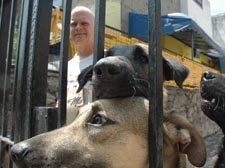
Lawrence Gerard cares for 95 abandoned dogs at his house on Calle Libertad in Guadalajara. Due to fears the city will seize and “kill” the dogs, he seldom leaves his home.

Story by : DAVID AGREN

Lawrence Gerard wades through a sea of barking dogs to answer a knock at his front
gate, which fronts Calle Libertad and the U.S. Consulate General in Guadalajara.

“See how clean that is,” he said proudly, pointing towards a cement patio with a statue of Saint Francis de Assisi, where a young man recently finished scrubbing.

Gerard, a retired priest from New York, houses 95 abandoned dogs at his humble abode. Despite his efforts to keep his property clean, the growing dog population – and the resulting noise and odors – sparked a feud with several nearby building owners and restaurateurs, who blame the animals for driving away sales and making their properties unattractive to potential renters. Three neighbors sued Gerard – one allegedly uttered a death threat – and the municipal government has dropped off an endless stream of multas (fines). His long-time landlord recently issued an eviction notice, ordering Gerard and the dogs to leave by August.

“I’m not getting rid of the dogs,” Gerard said defiantly. “I can’t just throw them out into the street.”

Caring for abandoned dogs consumes Gerard’s retirement and modest income, which he supplements by selling vestments. He pays out-of-pocket to have each bitch spayed and every dog receives vaccinations. He orders 750 pounds of dog food every 15 days, which is delivered to his home. Due to fears the city will seize and “kill” the dogs, he seldom leaves his home. When he ventures out, he locks all the dogs inside. (The big dogs spend the day outside, while the small dogs live inside. All the dogs sleep in the house).

“When I get back, the house is a little messed up,” he admitted.

Gerard’s legal problems date back to last year, when in his words, “Three neighbors got together in a conspiracy to sue me ... to get rid of the dogs.”

He won the case, but lost an appeal. Gerard’s lawyer is now taking the case to federal court.

“We’re going to say this block isn’t a residential area,” he explained.

Offices and small restaurants line the street. Several of the buildings are vacant. Gerard said his neighbor, an absentee owner, blames the dogs for driving away potential tenants, “But the fact is it’s a run-down dump.

“He’s charging outrageous rent,” Gerard contended, adding that the owner’s son made a death threat.

The restaurant owner on the other side, “Threw dirty hot water at the dogs from the washing machine.”

Gerard insists the dogs only bark when provoked. Children passing by sometimes tease the canines.

“It’s always the fat kids,” he said. “They throw rocks and bottles at the dogs.”

The quarrels with his neighbors and city hall have taken a toll on Gerard’s health.
He sleeps poorly and suffers from stress.

“My nerves are shot,” he confessed, adding that he’s lost weight. “I fear for the lives of the dogs and my own life too.

“Right now, I’m living in fear.”

If evicted in August, Gerard said he has few options.

“I have no money to move,” he said. “I need a big place with lots of land and no neighbors.”

Sending the dogs to the municipal pound is out of the question. Most of the canines were rescued from the street. Others were dumped in his yard. Gerard posted a sign last year to encourage adoptions, but it instead prompted owners to bring by unwanted dogs.

“People dump dogs in the middle of the night,” he said. “Someone dropped off a box of eight puppies at one time.”

Gerard also rescues dogs from the street. He points to a small black-and-white mutt called Cookie Gittleman – named for a customer – that he “took away from a drunk in the street.”

Another mutt named Scooter simply showed up at the front gate.

“He walked in like he owned the place,” Gerard said. “He’s a real gentle dog.”

Gerard has found eight homes for his dogs in recent months, but needs more willing owners. He charges 200 pesos, which offsets the cost of the vaccinations.

“If they can’t afford the vaccinations, they won’t look after the dog,” he explained.

And despite his struggles, he promises to keep fighting.

“It’s going to get ugly if (the city) comes for the dogs.”

From the Guadalajara Reporter

20 June 2006

Businesses cash in on World Cup

IMG_0024

Story by : DAVID AGREN

Beer flowed early last Sunday morning as Tapatios packed Guadalajara’s restaurants and bars to watch Mexico’s opening World Cup match, which El Tri (as the national team is known) dutifully won, thumping Iran 3-1. The victory continued Mexico’s tradition of starting strong in the tournament – although its teams usually fade and ultimately flame out in the round of 16.

Mexico played tentatively in the first half against Iran, but put aside off-field distractions to pull off the win. (Protestors dogged the Iranian team, though; the country’s controversial president stayed home, but mused about attending the World Cup.) Mexico goalie and Guadalajara native Oswaldo Sanchez, whose father passed away late last week, suited up and stole an almost certain goal from Iran early on. Chivas striker Omar Bravo scored Mexico’s first two goals, the second off of a pass from Antonio Naelson, aka Zinha. Naelson, a Brazilian-born midfielder, headed home the insurance marker late in the second half.

Coach Roberto La Volpe, who caught flack from World Cup organizers for smoking on the sidelines, deftly tweaked his roster in the second half, making substitutions that paid handsome dividends. His oft-derided decision to include two foreign-born players instead of temperamental star Cuauhtemoc Blanco proved genius.

While Mexico thrived in its opener, the United States stumbled, losing 3-0 to the Czech Republic. England scraped by Paraguay 1-0 and later toppled Trinidad and Tobago 2-0, but only after scoring twice in the game’s waning moments. (A distiller promised each Trinidad and Tobago player a barrel of rum if they upset England.)

Along with the national team, many Guadalajara businesses and national and local political candidates also boosted their fortunes last Sunday. Both of Mexico’s television networks drew mammoth audiences; more than three times as many people tuned in for the game than the last presidential debate. North of the border, more fans watched the Mexico match – in either English or Spanish – than the NBA finals.

Establishments showing the game saw sizeable crowds; many places offered breakfast and drink specials. German suds proved especially popular.

“We’re selling a lot of German beer this month due to the World Cup,” said Alejandro Orozco, business manager at Cerveceria Minerva, a Zapopan brewery that recently began distributing foreign beers.

Perhaps to avoid losing business, many of Guadalajara’s ubiquitous taco stands installed television sets – complete with rabbit ears – although reception was a bit fuzzy at some locations.

“If you don’t have a television, the customers will go somewhere else,” said Cesar Diaz, owner of Happy Fish on Avenida Tepeyac.

After the final whistle blew, fans armed with flags and horns and decked out in green shirts flooded the area surrounding the Glorieta Minerva, where squads of riot police kept a close eye on the festivities. Institutional Revolutionary Party (PRI) volunteers, wearing faux Mexico jerseys that read, “Zamora 06” across the back, worked the crowd. An especially rowdy group, hoisting a giant flag, circled the monument countless times.

Vendors, peddling giant sombreros and flags of all sizes, reported brisk sales in the area.

“Today is far better for sales than Fiestas Patrias (Independence Day celebrations),” said Abel Hernandez, a vendor who parked his cart at the corner of Avenida Mexico and Golfo de Cortes.

“It’s like a tradition,” he added. “You buy a flag and go wave it at the Minerva.”
Herandez predicted Mexico would reach the quarterfinals – one stage beyond where El Tri exited in each of the past three World Cups – which would ensure a worthwhile haul for his small business. An unexpected loss, though, could jeopardize profitability.

“If Mexico doesn’t win, we’ll still sell some things, but not nearly as much,” he explained.

Mexico next plays Angola on Friday at 2 p.m. before tackling Portugal on Wednesday at 9 a.m.

From the Guadalajara Reporter

13 June 2006

Presidential candidate visits Chapala, touts economic policies


Story by : DAVID AGREN

Like a white knight – who arrived in a white SUV – Andres Manuel Lopez Obrador, presidential candidate for the left-leaning Democratic Revolution Party (PRD), rode into Chapala last Friday, promising to rescue the country’s largest lake, which is often in an imperiled environmental state.

“We’re going to save Lake Chapala,” he told a boisterous crowd assembled in front of the town parish. Virtually all the presidential candidates promised to help Chapala, but Lopez Obrador was the only candidate to actually visit the town in 2006.

But along with riding to Lake Chapala’s rescue, Lopez Obrador also pledged to ease the financial predicaments of Mexico’s poorest families through schemes that critics charged would drag Mexico back to the 1970s, a period of extreme financial turbulence brought on by presidents indulging anti-business agendas. Shortly before visiting Chapala, the PRD candidate unveiled his economic policies, which, if implemented, would freeze prices, extend credit on easy terms and boost the incomes of poor families by 20 percent.

“We’re going to reduce the prices of electricity, gas and gasoline all across Mexico,” he said. “We’re going to guarantee prices for producers in the countryside ... we’re going to give credit.

"Bankers don't give credit to producers."

Lopez Obrador broached the banking topic frequently, invoking the ghosts of Fobaproa, a government bailout of the financial services industry after the last peso crash in the mid 1990s.

The intervention, which PRD supports said benefited wealthy financiers, still grates many middle- and lower-class Mexicans, who barely scraped by during the peso devaluation. Lopez Obrador repeatedly links Fox and the PAN with the scandal, even though it occurred during an Institutional Revolutionary Party (PRI) presidency.

"Because he received money from bankers ... (Fox) really hasn't accomplished anything," Lopez Obrador said.

Dressed in a trademark guayabara shirt – white, appropriately enough – and dress pants, the former Mexico City mayor struck back at critics of his proposals, saying, "I'm not an enemy of entrepreneurs ... or an enemy of people who invest money and create jobs."

Additionally, he reiterated his plan for giving seniors and single mothers monthly cash stipends – something he implemented during his term as Mexico City mayor.

Mural columnist Sergio Sarmiento was among the skeptics of Lopez Obrador's proposals. He politely pointed out, "The last time we had something like this was in 1982, when [former president] Jose Lopez Portillo ordered a 30 percent increase in salaries, which produced a subsequent economic collapse."

The PRD campaign rolled through Jalisco on a slight upswing; most public opinion polls showed Lopez Obrador closing in on National Acion Party candidate Felipe Calderon. Lopez Obrador insisted, though, “We’re 10 points ahead of the other campaigns.

He disparaged the mainstream polls and pollsters, saying, “(It’s) a war in the media.”

Lopez Obrador offered no proof of his supposed advantage. One spectator at the rally branded the unfavorable polls a “conspiracy.”

Along with spelling out his agenda, Lopez Obrador feted the PRD’s Jalisco candidates, who garnered mixed reviews from the audience. The crowd jeered gubernatorial candidate Enrique Ibarra, who until recently was a high-ranking PRI official. Jaime Mexia, the PRD aspirant for Chapala city hall drew cheers when he announced, “The first thing I’ll do is turn down my mayor’s salary.”

Lopez Obrador left the stage quickly after the event ended, putting little time into working the crowd (he had scheduled a rally for Ocotlan later that afternoon). A large group, though, chased his white SUV down the Malecon.

From the Guadalajara Reporter

09 June 2006

Debate leaves election outcome mired in doubt


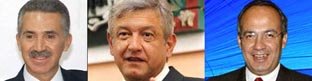
Roberto Madrazo, Andres Manuel Lopez Obrador, Felipe Calderon

Story by : David Agren

Mexico’s second and final presidential debate on June 6 promised fireworks, but the fuse was ignited miles away from the made-for-television event, with unknown gunmen targeting the wife of a businessman supposedly harboring explosive evidence against Democratic Revolution Party (PRD) candidate Andres Manuel Lopez Obrador and National Action Party (PAN) candidate Felipe Calderon – who boasts of having “manos limpias (clean hands)” – fending off accusations of nepotism.

With Lopez Obrador and Calderon running neck-and-neck – three polls released last week said the pair were in a statistical tie – most of the attention focused on the two frontrunners, who sported drastically different demeanors – and attire.

Lopez Obrador, wearing a dark suit and daring sunny-yellow PRD tie, looked serene, but stiff and out of his element – which perhaps answered why he skipped the first presidential debate. Speaking calmly, he outlined his agenda for Mexico’s poor – a constituency he champions.

“The poor first, that’s how we’ll govern,” he said, seeming to trot out the same answer for all of Mexico’s challenges – including foreign policy.

Although goaded, he avoided outbursts, defying his angry stereotype. He even ended the debate with the cheery comments, “Smile. We’re going to win.”

Lopez Obrador raised his usual hot-button issues, most notably Fobaproa, a bailout of the banking industry a decade ago.

Calderon targeted Lopez Obrador with every outburst, castigating the former Mexico City mayor’s job performance in the capital.

“(Lopez Obrador) left the Federal District as the most indebted city, the most insecure in the country, the entity with the highest corruption in all of Mexico, with the highest rate of unemployment and the lowest growth rate in the country,” the panista said.

Calderon spoke more forcefully than the last time, rattling off his proposals in monotonous numbered sequences. He initially seemed ready for everything; when Lopez Obrador alleged PAN improprieties in Fobaproa, Calderon flashed a photo of a PRD candidate, who supported the bailout.

But as the debate neared its conclusion, Lopez Obrador accused Calderon’s brother in-law of not paying tax on contracts received while the PAN candidate was energy secretary. The debate format prevented Calderon from immediately replying. The PRD later produced documents supposedly proving the improprieties. Calderon spent the day after the debate denying the charges.

The remaining three candidates on stage were largely overshadowed. Institutional Revolutionary Party (PRI) candidate Roberto Madrazo toned down his rhetoric and confrontational approach, which had turned off viewers in the last debate. He differentiated himself, speaking of a law-and-order agenda and describing the PRD and PAN as “a radical and conflictive left and (an) intolerant and repressive right.”

Most opinion polls show Madrazo running third.

Patricia Mercado of the Alternativa, one of the surprise performers in the first debate, kept speaking of controversial social issues, no doubt trying to solidify her modest support base. She captured lightning in a bottle during the first debate, but not last Tuesday. She needs two-percent support for her party to stay certified.

Most pundits declared Felipe Calderon the winner by a slim margin with Lopez Obrador a close second. Neither man delivered a knockout punch.

Several gunmen, though, delivered their own blows just prior to the debate, attacking a vehicle carrying the wife and children of jailed businessman Carlos Ahumada in an upscale Mexico City neighborhood. No one was injured. She had been scheduled to release a video that could have reflected badly on Lopez Obrador. A Lopez Obrador associate was shown accepting a large bribe from Ahumada in 2004. In a statement, the PRD denied any involvement in the shootout and suggested the event might have been staged.

From the Guadalajara Reporter