
Showing posts with label Canada. Show all posts
Showing posts with label Canada. Show all posts
30 May 2010
Mexican resentment lingers over Canada’s visa 'insult'
An RBD video filmed in 2005 in the Alberta Rockies
The matter of obtaining a visa for travel to Canada continues generating discontent in Mexico, some 10 months after the measure was imposed in a sudden and sloppy manner to stem a growing stream of bogus refugee claims filed by Mexicans.
President Felipe Calderón, as expected, raised the issue while visiting Canada last week. The Canadian government acknowledged shortcomings in the new process, but maintained the visa requirements would remain in tact.
Opinions on the visa issue vary in Mexico. Some consider it an insult. Others view it as a waste of time and money since they have few ties to Canada and would seldom visit. A few waiting in line outside the Canadian Embassy for their visa last summer told me they had no objection to the travel restrictions, but expressed displeasure with the seemingly lack of organization. One student from an expensive private university and frequent traveller to Vancouver told me she endorsed the idea, saying, "There are already too many Mexicans in Canada."
Hard feelings linger for many, however.
One friend, whose husband is Canadian, reported having to submit a letter from her in-laws, vouching for her visit - even though she had been a frequent visitors. If travel to Canada weren't so necessary, she says, "I wouldn't do it."
The fallout of the hastily imposed visa could unravel nearly two decades of promotional activities on the part of Canadian education and tourism officials, who successfully had promoted the country as an affordable, not-so-distant destination for tourism and study abroad excursions. The Canadian Tourism Commission (CTC) even brought the sappy, teen telenovela Rebelde to the Alberta Rockies for a week of episodes, while the pop group RBD filmed a video on Lake Louise.
In a way, Canada became cool for many Mexicans - an odd feat for a country considered nice, but dull in many parts of the world.
The CTC figures that tourist visits to Canada have dropped by 33 percent since the visa requirements were imposed as the visa, a poor economy, sinking peso and surging Canadian dollar all combined to diminish interest in travelling north.
Signs of diminished interest in Canada quickly became apparent. AeroMéxico canceled its Canadian routes earlier this year - which it blamed on the visa - as the website Flightglobal reported the airline mostly served Mexican travellers on its Mexico City-Toronto and Mexico City-Montreal routes. Mexicana, meanwhile, has offered more seat sales on its flights to Canada and dropped its Mexico City-Edmonton route.
The exact economic impact of the visa is tough to gauge, but the CTC reported that over the past decade Mexico had been a focus country and, of the countries with CTC offices, Mexico had produced some of the best growth figures. The CTC put the annual the growth figure at 14 percent over the past decade. The CTC also classified Mexican visitors as "high value" as they are known for spending big while travelling abroad and are used to leaving the country for shopping trips. (Witness the glut of malls in such unglamorous destinations as the Río Grande Valley that cater almost exclusively to Mexicans, including Mexicans from places such as Mexico City.)
Expect discontent over the visa issue to continue simmering. In the meantime, here's my latest on the issue for Canwest News Service.


27 May 2010
Calderón visit as much about domestic politics as visa-free travel

What isn't being said about President Felipe Calderón's globetrotting ...
Calderón visit as much about domestic politics as visa-free travel
DAVID AGREN
MEXICO CITY -- Mexican President Calderon publicly scolded his American hosts during a visit to Washington last week, when used a speech to a joint session of Congress to condemn an anti-illegal immigrant measure recently passed in Arizona and lax gun laws that facilitate the southward flow of weapons into Mexico.
The condemnation drew scorn in the United States, but played well with the domestic audience back home - especially in the political class.
It’s uncertain if Calderon will bring a similar tough approach to Ottawa this week, his first trip to the capital since the federal government imposed visa restrictions last July on Mexicans heading to Canada.
What is certain, however, is that Calderon brings the same pressing domestic and political concerns to Ottawa as he did to Washington -- even though the visit appears timely: The Canada-Mexico relationship has appeared to be less openly friendly over the past year as the new visa regulations for Mexicans have been poorly received and visits to Canada -- a country that had been an increasingly trendy destination for tourist trips and studying abroad -- have subsequently diminished.
But political analysts say scolding Canada for imposing visa restrictions on Mexicans, instead of fixing a refugee system rife with abuse and bogus claims, would play well with the domestic audience and be an easy way for Calderon to score political points at a time his National Action Party (PAN) has been performing poorly on the local level and gubernatorial elections are underway in 12 of the country's 31 states. The outcome of those election could shape the final two and a half years of his presidency as he tries to achieve reforms to labor, finance, the political system and the public security apparatus, but confronts a divided Congress and increasing powerful state governors reluctant to cede territorial control over matters of law-and-order .
“He’s going to complain, not in a diplomatic way, but in terms of propaganda, about the need for Mexicans to request a visa,” said Aldo Muñoz Armenta, political science professor at the Autonomous University of the State of Mexico in Toluca.
“The only forum he has to promote his agenda … is that he leaves the country," Muñoz added, referring to the traditions of president not openly campaigning in gubernatorial and local contests.
At home, Calderon faces a tough domestic agenda that goes beyond the problems of security and battling the cartels -- a battle that has claimed more than 23,000 lives since he took office in December 2006.
The Mexican economy, hit hard by the H1N1 outbreak and problems in the United States, dipped by nearly seven per cent in 2009, while the rates of unemployment and poverty have increased.
The 12 state-level elections pose enormous political problems, too.
The resurgent Institutional Revolutionary Party (PRI) -- which governed for 71 years until being deposed by the PAN in 2000 -- could run the table on July 4, further weakening Calderon's administration. It could also add to the PRI's advantage for the 2012 presidential elections as the party already governs 19 states and its governors operate effective political machines for turning out the vote, rule with little transparency and frequently manage social programs for electoral purposes.
“There are many elections in which the PAN is at a disadvantage. He needs … to strengthen his party,” Muñoz said.
“These foreign trips are unavoidable,” he added. “The problem is they’re used for electoral purposes.”
Muñoz expects Calderon to raise the visa issue prominently in Canada -- much as he raised the migration and gun issue in the U.S. Congress.
Others issues on the Canada-Mexico agenda include trade, the expansion of programs for sending temporary and agricultural workers to Canada and Canadian assistance in combating the ongoing security problems in Mexico. The Mexican media is certain to raise the issue of fugitive union boss Napoleon Gomez, who has been residing in Vancouver to avoid charges pertaining to the misappropriation a $55 million trust fund.
But the travel visa still generates some negative headlines and hurt feelings in Mexico and its clumsy and sudden implementation has not been forgotten.
The pop-culture publication “Chilango” summed up the mood at the time of the visa’s implementation with its cheeky front-page admonishment, “Be patriotic and don’t be go to Canada” -- a twist on a common expression disparaging “chilangos,” as Mexico City residents are known.
Muñoz says the visa issue, like any matter pertaining to migration -- a perpetual issue in many downtrodden parts of the country -- would receive the most attention in Mexico and provide Calderon with the best opportunity for building political capital.
“Migration is a permanent issue in Mexico. It continues being an issue capitalized on a lot … it’s a beneficial issue for politicians.”
18 May 2007
Tourist tragedies do not reflect the true Mexico

Photo by Steven H. Miller
Here's the dispatch from Ajijic, published in today's Calgary Herald: http://www.canada.com/calgaryherald/news/story.html?id=e1080d06-0d51-448d-88cf-24a14cf34a0b
Tourist tragedies do not reflect the true Mexico
David Agren, For the Calgary Herald
Published: Friday, May 18, 2007
Chris Wilshere left Toronto several years back for an orchestra job in the sweltering heat of Culiacan, Mexico, a prosperous state capital north of Mazatlan famous for a baseball team called the Tomateros (Tomato Growers) and a shrine to Jesus Malverde, the patron saint of narcotics traffickers.
Some of his colleagues never understood his motives for heading south, but he found a steady paycheque, appreciative audiences for classical music and a pretty young lawyer, whom he married six months ago.
He now promotes one of Western Mexico's largest music festivals, which showcases young Canadian talent.
Wilshere lives in a "glorified dust bowl" that even Mexicans consider dodgy. Narco-gang violence flares often.
Virtually everyone can recount stories of their brushes with narcos -- like the Hummer dealership employee who witnessed someone paying for three new vehicles with a thick wad of cash.
While acknowledging, "Mexico doesn't come without its problems," he considers his adopted home "safe" and expresses few misgivings about his personal security.
"I think that as First World (residents) we get paranoid over the tiniest, insignificant things that may threaten our health or safety."
Before arriving in Culiacan, Wilshere initially began visiting Ajijic (pronounced: Ah-hee-heek), a sedate lakeside village near Guadalajara, where his grandmother had retired. Ajijic attracts Canadian retirees in droves with its perpetual spring-like climate, access to good health care and affordable prices. (Property tax bills run about $100 per year.)
Canadian licence plates are ubiquitous, a Canadian Club chapter meets monthly and a local supermarket peddles Moosehead beer for $3.25 a six-pack.
Ajijic is one of the largest enclaves of Canadians outside of Canada.
The Canadian Embassy in Mexico City estimates some 8,000 expatriates winter in the region.
Approximately 3,000 Canadians live there year round, although with high-speed Internet, VoIP phones and satellite TV, many closely follow affairs back home.
And what they're seeing nowadays -- a spate of tourist misfortune stories -- dismays virtually everyone, including Dan McTavish, the former Canadian Club president in Ajijic.
"Everyone down here can watch City TV, which they get through their satellite systems, and see crime and shootings back in Toronto," he comments.
Crime happens in Ajijic too. A Vancouver man in a neighbouring municipality was shot dead in late 2005 for unknown reasons, although rumours abound about a water dispute. A London, Ont., couple was struck in a January hit-and-run -- an incident that reportedly happened after an evening of drinking.
The story made the front-page of a national newspaper -- as if such calamities never happen in Canada.
The incidents unfortunately blemish Ajijic and Mexico's image, but hardly sour any Canadians on their adopted country, which is generally placid -- spare parts of the northern border region -- and populated by law-abiding people.
Many Canadians express feelings of hurt and embarrassment over the provincial viewpoints streaming out of Canada these days, along with the eagerness to malign Mexico for tourist tragedies that often stemmed from irresponsible or disrespectful behaviour.
"I can't help but feel (these are) individual situations that the media have run to sell papers," says Allan Rose, the former honorary Canadian consul in Guadalajara and a 20-year Ajijic resident.
Rose was consul during NAFTA's advent, a time when "Mexicans actually discovered where Canada was."
He frequently promoted Canada to Guadalajara-area universities and business organizations, which perhaps considered the diplomat "something of a novelty . . . a new-found interest."
Mexicans discovered Canada and now travel north in sizeable numbers for tourist and study excursions, but Canadians never reciprocated to the same degree.
"I'm personally aggrieved and hurt by some of these (negative) references," he says mournfully.
Rob Parker, a former Conservative MP living near Ajijic, also objects to the unflattering portrayals of Mexico, saying,
"If it were that dangerous, Canadians wouldn't be here."
Petty aggravations are rife in Mexico -- like early morning fireworks, discourteous drivers and abusive monopolies -- but it's a fascinating, complex and culturally rich country. Canadians here accept the shortcomings, even if they don't like them, and find it unnecessary and disrespectful to scold Mexicans for how they order their affairs. "It's their country to decide. It's our decision to live here," Parker says. "We like living here."
14 May 2007
Desde la Ribera de Chapala
 Photo by Steven H. Miller
I spent the weekend in Ajijic, a town on the north shore of Lake Chapala, enjoying the moderate climate, spectacular lake views and a few adult beverages. For those reasons, Canadians descend on the region in droves. According to the Canadian Embassy in Mexico City, some 8,000 Canucks winter here and 3,000 live in Ajijic year round, making it one of the largest enclaves of Canadians outside of Canada. While idyllic, it falls short of perfection, but not by much. (I prefer nearby Guadalajara as I'm young and speak Spanish.)
Most members of the Canadian population here expressed dismay - in some cases anger - with the coverage of the recent death of a Canadian tourist in Cancun and the portrayal of Mexicans as sleazy and inept. (Funny how once cocaine was citied in a toxicoligy report the Canadian media sheepishly backed off the story.) As one expat sarcastically asked me this weekend: "Is there a lack of bad news in Canada?"
Some Canadians come to Ajijic to simply stretch their retirement savings. They don't stay for long. The people who retire here generally love Mexico and appreciate the culture - even if there are a few inconveniences. Of course, no one in Canada cares about that.
I've written many stories on Canadian issues and expats over the past two years. Contrary to what many Canadians think, Mexico is full of opportunities, law-abiding citizens and a welcoming culture. Mexicans truly like Canadians and show a genuine interest in our country. It's a shame that so many Canadians are too provincial to understand that, or reciprocate the good will.
Allan Rose, Canadian trailblazer in Ajijic (Miami Herald Mexico Edition)
Dazzling DaNisha (Miami Herald Mexico Edition)
Even-tempered expats aren't arguing over election (Guadalajara Colony Reporter):
EduCanada aims to recruit (Miami Herald Mexico Edition)
Expatriate Canadian building chocolate empire (Guadalajara Colony Reporter)
Rebelde with a cause (FFWD)
11 May 2007
Cocaine found in dead Canadian's system
The Canadian Press is reporting that toxicology tests found traces of cocaine in the system of Jeff Toews, the Grande Prairie, Alta. man, who suffered a fatal head injury while vacationing in Mexico last Monday morning. The Cancun hospital that treated Toews carried out the tests.
The family still insists there's a cover up, although their comments at a press conference on Thursday - held prior to the toxicology report being released - were unconvincing. CanWest News Service reports:
"Murray Toews admitted the family has no firm answers about what happened between 3 a.m. and 3:30 a.m. on Monday, but claimed Mexican authorities were trying to protect their tourism industry in releasing the damaging report."
When in doubt, blame the Mexicans. And since Canadian reporters and editors generally know little about the country - Mexico isn't a priority or interest - they're inclined to run with that narrative. (If I sound bothered by this: I AM.)
So many Canadians are unfairly maligning Mexico these days, but failing to properly scrutinize the reckless and disrespectful behavior of some of their fellow citizens coming down here.
09 May 2007
Canadian media stick to script
Yet another Canadian tourist met misfortune in Mexico and once again the Canadian media are all over the story. Jeff Toews, a northern Alberta man, is in a coma after suffering a head injury. The family - and some headline writers - say he was beaten at the Cancun resort where he had been staying. Mexican authorities - the same ones handling the Ianiero case - say otherwise.
A friend of Toews told the Edmonton Journal: "He was on the resort property and somewhere between the nightclub and his room, something happened."
I'd like to know what that something was, too. Did he accidentally fall over the stupidly-low railings that are so common in Mexico? Alcohol? (I must ask.) But since Mexico is involved, there can only be one outcome, right?
Somewhat unbelievably, the same Journal story says of the Thunder Bay women erroneously considered suspects in the Ianiero case by the Quintana Roo attorney general: "The two women have launched a website, http://www.mexicoinjustice.ca/, proclaiming their innocence and lobbying the federal government to ban travel to the Cancun and Mayan Riviera regions." (Emphasis added)
I just returned from a jaunt to Culiacan and Mexico City. Surely those places warrant more of an advisory than Cancun and the Mayan Riviera - even though I've never encountered problems on my eight trips to Mexico City over the past year. Also, aren't Canadians free to travel where they wish?
With the Canadian media these days, the only stories from Mexico that matter involve tourist tragedies. It's as if bad things don't happen back home; is there a sudden lack of crime?
Update: Jeff Toews unfortunately has been declared brain dead. He was flown back to Alberta last night. The family alleges a cover up, something many Canadians are no doubt inclined to believe. And why not? In Quintana Roo, the Cancun police chief is now under investigation for links to narcotics traffickers.
But the Mexican Embassy in Ottawa disputes the Toews' claims. It issued a document detailing what supposedly happened on early Monday morning at the Moon Palace in Cancun. Among other things, the victim had been drinking heavily, according to Mexican authorities.
The fact the Mexicans are taking public relations seriously is a welcome change. Having worked as a journalist in Mexico for more than two years now, I find few people down here understand the concept of publicity or communications, but I digress ...
Some Mexico observers are tiring of this endless barrage of stories on Canadian tourists encountering problems in Mexico. The Mexfiles perhaps sums up the frustration best with this headline: http://mexfiles.wordpress.com/2007/05/10/canadian-press-on-mexico-same-shit-different-day/
14 April 2007
Ianiero case keeps making news
The usolved 2006 murders of Canadian tourists Domenic and Nancy Ianiero in their Playa del Carmen hotel room keep getting ink back in Canada as The Globe and Mail is reporting that a documentary to air on CTV alleges the oft-maligned Mexican prosecutor in the case has attempted to "cast suspicion on innocent Canadians and away from a suspected Mexican killer." The motive: protect Mexico's tourism industry, which is ailing due to drug-gang violence in the northern border region and Acapulco and the lingering effects of last year's conflict in Oaxaca. (The Tourism Secretariat reports visits to Mexico dropped in 2006.)
The theory sounds plausible since Mexico depends so heavily on tourism income and the Mayan Riviera was badly battered by hurricane Wilma in 2005. More recently, President Felipe Calderon pushed expanding the tourism industry as one of his government's top priorities. (He even said Mexico would make issuing 180-day tourist visas standard.)
But Mexico's prosecutorial system is often lacking. Sad, but true. And the Ianieros aren't the only ones seeking justice. Take the case of Brenda Martin, a Canadian woman locked up in Guadalajara's notorious Puente Grande prison. She and an American woman, Rebecca Roth, ended up working in Puerto Vallarta for a Canadian, who, according to the Edmonton Journal, was running an Internet scam. Although the fraud artist has since been convicted and acknowledged that the women had no role in his schemes, the pair have been locked up for more than a year.
What sadly taints things are cases like Peter Kimber, who spent time in an Oaxaca jail and told a horror story to Canadian media outlets seemingly anxious to run anything that smacked of a Canadian suffering misfortune in Mexico. It turns out that a British couple in Huatulco, who were not contacted for their side of the story, allege that Kimber cheated them out of $20,000. (Kimber was not asked to pay a $20,000 bribe, but to reimburse the couple.) The Canadian also apparently passed himself off as a building contractor, but did shoddy work on a building the Huatulco asked him to construct. Kimber is thankfully out of jail - and out of Mexico.
22 March 2007
EduCanada

EduCanada passed through Guadalajara once again last month as Canadian language schools, universities and school districts pitched their programs and the country to Mexicans, who generally have favorable views of Canada.
Somewhat surprisingly, attendance bounced back this year after dipping in 2006, a phenomenon attributed by organizers to the outcome of last July's presidential election. One school district supervisor said he saw no lack of interest last year, but virtually everyone sending a child north - perhaps spooked by the prospect of a PRD victory - insisted on paying upfront.
Politics aside, Canada remains by far the most popular destination for Mexicans wanting to learn English. The Canadian government accommodates them by not demanding a visa for either entering the country or studying for up to six months. Students in some thinly-populated provinces can stay after completing their courses - and eventually gain residency.
The Miami Herald Mexico Edition ran my dispatch on this year's EduCanada in the Monday edition: http://www.mexiconews.com.mx/23842.html
02 March 2007
RBD member comes out of the closet

Anytime one of the members of the Mexican pop sextet RBD makes news - usually for pretty inconsequential stuff, like denying anorexia rumors - traffic to my blog surges. Today, for example, band member Christian - best known for his flamboyant hair colors - came out of the closet, confirming stories that he is, in fact, gay. Rumors also abound that he tied the knot in Canada. Just as expected, traffic to my blog is suddenly brisk.
Here in Mexico RBD is sort of the Latin American answer to S Club 7 - just far more gauche.
RBD came out of the teen telenovela Rebelde, which exited the Televisa airwaves months ago, but lives on in far away places like Romania and Peru. Set in an elite private school, Rebelde in many ways highlighted the unseemly class schisms rife in Mexican society - and the fresa-naco rift. Ironically, Christian played a naco character on the show. (Naco is slang for tacky or lacking class; the newly rich are often branded nacos.) The show, though, was in many ways naco. Rebelde also ran a storyline in which one of the character's father went to the trouble of setting up his son with the father's trophy girlfriend to prove the young man wasn't gay.
Anyway, this isn't exactly newsworthy, but it's all highly amusing. I wrote on Rebelde's Canadian adventure back in 2005 - the photo sent by Tourism Alberta was smoking hot, but also, dare I say, naco?
23 February 2007
Northern Lights Music Festival wraps up in Ajijic

Photo by Steven H. Miller
The Northern Lights Music Festival wraps up in Ajijic on Feb. 27 with a gala concert. The festival, which turned five this year and generally showcases young Canadian talent, was co-founded by Chris Wilshere (wearing the gold tie) a Toronto native who now plays violin for a state symphony orchestra in Culiacan, Sinaloa - a town perhaps better known for banda sinaloense rather than classical sounds. Despite the challenges of fomenting a demand for classical music in Mexico, the festival is now one of the biggest in the region.
UPDATE: The Toronto Star ran a story that I wrote on Chris Wilshere and the festival in the Feb. 24 edition: http://www.thestar.com/artsentertainment/article/184786
17 February 2007
More attention given to crime in Mexico
At some point this rash of stories about Canadians meeting misfortune and death will quiet down - but not just yet. The Globe and Mail ran an excellent investigative piece on the 2006 murders of Domenic and Nancy Ianiero in Playa del Carmen in the Saturday paper. It's quite possible what the victims' son and his high-profile lawyer allege - robbery and later murder - isn't so.
For many expats living down in Mexico, this whole saga - more specifically, the intense media coverage - has been bothersome. No media outlet that I'm aware of has mentioned that for all of the bad news streaming out of Mexico, the Canadian expatriate population in Ajijic, Jalisco keeps on growing. (It probably numbers around 7,000.) And if the expats are looking for a dose of bad news, a friend here commented, "Everyone down here can watch City TV, which they get through their satellite system, and see crime and shootings back in Toronto on a regular basis."
Why some of the other cases down here - the story of Peter Kimber, the B.C. native rotting in an Oaxaca jail, case comes to mind - suddenly receive attention is curious? I exchanged emails with a British couple near Huatulco, whom Kimber's supporters allege screwed over the Canadian. The couple, Kevin and Tess Hunneybell, seemed rather perplexed that two years after Kimber's incarceration began, the Canadian media suddenly showed interest. No one bothered to contact them for their side of the story either.
Or most egregiously, the excessive coverage on the London, Ontario couple struck in a hit-and-run in Ajijic last month. Since when does a snowbird getting hit in a foreign country warrant a front-page story? (the Guadalajara Reporter quoted a public security official who said the male victim had alcohol in his system ... Not sure if the Canadian media has mentioned that.)
Other Canadians have met misfortune in Mexico and returned - I include myself in the group. I once interviewed a prospector from Vancouver who was drugged and robbed while travelling on a bus from Guadalajara to Michoacan. He expressed no bitterness towards Mexico; here's what he told me back in the spring: “I’m not down on Mexico at all ... I think this could have happened anywhere.
“Just be a little more intelligent than me.”
The couple of Canadians caught up in a recent Acapulco shootout expressed similar sentiments and drew ridicule from back in Canada for their positive feelings towards Mexico.
One thing puzzling in all of this: why are some of the Canadians meeting misfortune in Mexico receiving such attention, but not others? The Ianieros' deaths were preceded by the murder of a Canadian in the Lake Chapala area in late 2005. The facts are murky - a lot of people have theories - but only the Vancouver Sun ran an opinion piece on the case. Kristen Deyell, an exchange student from Calgary, was shot dead outside a Guadalajara-area nightclub in April 2004 (I lived 200 meters from the crime scene and was at the same place that night). The main suspect is the son of public enemy No. 1. This case hasn't received near the attention of the Ianieros'.
Perhaps most unfortunate in all this - speaking for myself - is seeing how ignorant Canadians are about Mexico and Latin America. There's more to this country than sleaze and sin in Tijuana and murder in Playa del Carmen, but you'd never know that by reading a Canadian newspaper.
10 February 2007
Another tale of a Canadian experiencing Mexican injustice - or not
An interesting press release (for lack of a better description) from an expatriate couple in the Huatulco area contradicts the woeful story of Peter Kimber, a British Columbia native locked up in an Oaxaca jail who has recently been the subject of nationwide media coverage in Canada.
The Canadian, who was in Mexico with his common-law wife and children, said Mexican authorities tossed him in jail after hotel owners Kevin and Tess Hunneybell supposedly sent the cops after him because of $20,000 that was owed. The money was paid, according to the Hunneybells, for Kimber to construct a building. Kimber's completed work was apparently shoddy.
The couple took exception with this line from The Globe and Mail story on Kimber's plight and the work the Canadian was hired to for:
At a site where he was helping to build a hotel, a dispute developed with the owners who told police that he owed them money.
The Hunneybell's countered:
(Kimber) was NOT ‘helping’ to build the hotel, he WAS the contractor and was paid to do this work. He was later found to be both negligent (unsafe foundations) and illegal (had no permit to work, nor build, nor to remain in the country.)
Kimber's story of spending more than two years in a Mexican jail ran in The Province (Vancouver) on Jan. 31 and later in both national newspapers. Coincidentally, a spate of newspapers stories on Canadians' misfortune have come out around the same time.
This is, unfortunately, part of a feeding frenzy. Canadian newspaper editors generally show a crushing disinterest in Mexican affairs - except when a Canadian tourist meets an untimely end or misfortune. For an alternative opinion on Mexico, a media outlet could run a dispatch from Ajijic, Jalisco, where the Canadian population keeps on swelling each year. It's one of the largest enclaves of Canadians outside of Canada. The Kimber story, though, fits what they're looking for. And, in fairness, Peter Kimber could be the victim of an injustice and his accounts of prison life are certainly hellish.
The Hunneybells perhaps should have scrutinized Kimber's immigration documents - which the couple said were fakes - a little more thoroughly, although in expatriate circles, there tends to be a lot of good will and a willingness to give people the benefit of the doubt. And no shortage of charlatans and people with shady backgrounds pass through.
The other side of this story definitely needs to be reported more thoroughly.
The Mexfiles blog summed up this situation quite nicely and the author quite accurately commented towards the end of his post, "Canadians, for all their good qualities, sometimes can be awfully provincial."
Update: The Globe and Mail reported on Saturday that police in Acapulco impounded a green Nissan Tsuru taxi (aren't all taxis Tsurus in this country?) and are searching for the driver who usually rents the vehicle, which might have struck and killed Ontario native Adam de Prisco on Jan. 7. The family said it hasn't received updates on the case and maintains that de Prisoco was beaten prior to being involved in the hit-and-run collision that two coroners concluded was responsible for his untimely death.
09 February 2007

08 February 2007
Poutine arrives in Mexico

Chef Bernard Corriveau proudly shows off a plate of poutine. The Quebec native, who now resides in Zapopan, prepared the dish for a group of cooks from the Sanborns restaurant chain. Sanborns locations in Guadalajara will put poutine on the menu this month as part of Canada Week in Jalisco. No word on if Carlos Slim, Latin America's wealthiest man and the owner of Sanborns, signed off on the menu selection.
Poutine, a plate of french fries smothered in gravy and cheese curds, is wildly popular in Quebec - not to mention an instant heart attack.
05 February 2007
A Canadian finally talks straight on Mexico
The bad news on Canadians meeting misfortune while travelling in Mexico seemingly won't abate, but at least one person - the inadvertent victim in a shootout - is finally voicing a lot of what the "don't travel to Mexico" crowd completely overlooks: that this country has many redeeming qualities and that once experienced, are difficult to overlook.
Rita Callara, a woman from the Niagra Falls area, and another Canadian, suffered injuries at an Acapulco hotel after a gunman opened fire. Despite being in the wrong place at the wrong time, here's what she told Toronto radio station AM 640, “I'm not scared ... That's some of the things that happen. What about Toronto – every night they kill people?”
Finally someone with the courage to point out that Toronto hasn't been the most tranquil spot. A buddy in Ajijic reacted to the Adam de Prisco shooting by saying, "People here can turn on City TV (Toronto), which they get via Star Choice, and see shootings all the time."
I've been accused of being insensitive to the bad things happening to Canadians - some are just dreadful, like the British Columbia resident rotting in a Huatulco jail - but I've had my own brush with tragedy. A classmate from Calgary, who I never met, was shot dead after leaving a Zapopan nightclub in April 2004. Ironically, I was at the same nightclub on the same night and lived 200 meters from the crime scene. The alleged perpetrator is none other than the son of a notorious narcotics trafficker. Despite all this, I returned to the Guadalajara area in 2005 - and so has every other Mount Royal College exchange student studying in Mexico at the same time as the victim. The victim's family, obviously distraught due to a lack of justice, urged my alma mater to discontinue exchanges with Mexico.
Two things:
1. The world doesn't work like Canada - and there's value in witnessing that. Canada is quiet, supposedly safe and very safety conscious. While visiting another Canadian friend here in Guadalajara, we took the dog for a walk and carried our adult beverages out the door with us. We both commented on how nice it was to not have some busybody scolding us.
2. A feeling runs rampant in the forums about the Canadian deaths that the government should be protecting Canadians abroad. How? Contrary to popular belief, maple leafs sewed onto backpacks are not protection. Bad things happen to Canadians - and foreigners of all nationalities while travelling abroad. Why is Mexico being singled out?
22 January 2007
Buy your iPod in Canada
Perhaps drawing inspiration from the The Economist magazine's annual Big Mac index, which gauges currency valuations and purchasing power, an Australian bank substituted the increasingly ubiquitous iPod for the oft-maligned hamburger.
Canada ranked as the cheapest place to buy a 2 GB version of the device, while Brazil was the most expensive. Surprisingly, Mexico was the fourth cheapest place on the list. An iPod, according to the survey, costs only $5.46 more in Mexico than in the United States.
19 January 2007
Canadians flock to western Mexico, but not necessarily San Miguel de Allende
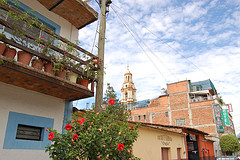
Photo by Steven H. Miller
The Atencion newspaper in San Miguel de Allende published a feature I wrote on why so many Canadians settle in the Lake Chapala area instead of San Miguel. Basically, the Lake Chapala area is cheaper. The weather is also more agreeable. Most of us didn't leave Canada to freeze in the winter - and San Miguel can get pretty chilly. The Lake Chapala area has also been well promoted in parts of Canada and word of mouth advertising is now really spreading quickly.
Here's the top of the story:
Canadian retiree Dan McTavish, who has lived in Ajijic, Jalisco, for more than a decade, listed several reasons why so many of his fellow Canucks settle in the Lake Chapala area instead of San Miguel de Allende or any other part of Mexico’s interior.
Like many Canadian expats, he mentioned the weather as one of the main factors. The microclimate surrounding Lake Chapala is decidedly less chilly and often described as “perpetual spring.”
“Canadians come to Lake Chapala because it is not as cold as San Miguel,” the former Toronto native said. Additionally, “It is near ... Guadalajara. I can get off an airplane from the US or from Mexico City [on my way back from Canada] and be at my home in 35 to 40 minutes.”
While San Miguel de Allende has a noticeable Canadian community—estimated at about 15 percent of the expatriate population —Canadians seemingly dominate the Lake Chapala area, which is considered the largest enclave of Canadians outside of Canada, except parts of Florida in the wintertime.
Read the whole feature under the community section of Atencion's website.
18 January 2007
Oaxaca no longer off limits - for some

The U.S. State Department rescinded its travel advisory for Oaxaca yesterday, but the Canadian government still says its citizens shouldn't go to the southern Mexican state - scene of a nasty teachers' strike that descended into open revolt against the local PRI governor. The Canadians at least acknowledge, "The situation is showing signs of improvement."
Headlines of a 19-year-old Canadian traveler in Acapulco meeting an untimely end on Jan. 7 generated endless headlines in Canada and promoted no shortage of calls for a blanket advisory cautioning against Mexican travel. Perhaps that explains the Canadians' tepidness in lifting its Oaxaca advisory. But Adam DePrisco was struck by a vehicle, according to autopsies performed in both Canada and Mexico. It was most likely a hit-and-run collision, although his family alleges murder.
The two situations shouldn't be linked in any way. I've booked my ticket for Oaxaca - just 2,150 pesos round trip from Guadalajara on Avolar - and I suspect others will follow suit. The state could use the boost and it's not to be missed - even if the Canadian government can't get its act together and scrap the travel advisory.
*For a telling statistic on how bad the tourism economy in Oaxaca is, look at these stats from the local airport operator, which saw a 32.6 percent fewer passengers in Dec. 2006 than in Dec. 2005.
14 January 2007
Some people say the stupidest things about Mexico
A young Canadian traveler sadly died outside of an Acapulco nightclub last week and news of his death is generating no shortage of headlines and emotionally charged comments on message boards. The facts are still sketchy, but similar to the case of the two Canadians killed in their Playa del Carmen hotel room last winter, the grieving family is alleging police and judicial ineptness. Many Canadians are also urging the federal government to issue a travel advisory for the entire country - instead of just certain zones like Oaxaca.
That would be overkill. Guadalajara is as tranquil as ever, as is Chapala and Ajijic - where record numbers of Canadians keep arriving each winter - and San Miguel de Allende. I spent the days leading up to New Year's in Mexico City with a Canadian friend and found it an ideal time to visit.
Canadians - even the ones that take winter junkets down to Puerto Vallarta and Cancun - really know very little about Mexico and thus a number of stupid and downright prejudiced comments have been appearing on message boards. These comments on the Globe and Mail's site by someone called Lyn Alg tops them all for sheer ignorance:
"One would be safer and wiser to take a vacation in the centre of Baghdad or in Afghanistan than in Mexico."
Please. It's small town cheap comments like this that make me not miss Canada, which for all of its supposed tolerance and worldliness, is distressing parochial and small minded - not to mention ignorant of Latin America.
To its credit, CTV posted a large collection of comments, which often struck a more reasonable note and included the feelings of Canadians presently residing in Mexico. One interesting theme was how many people had negative expriences in Acapulco. Those going to Puerto Vallarta grouse frequently about pushy time-share vendors, but those in the CTV forum raved about their experiences. Acapulco is badly over-built and ringed by slums. It's also in Guerrero, perhaps Mexico's most corrupt and backwards state. Acapulco is now a playground for rich chilangos (Mexico City residents) and not a prime destination for foreigners.
Update: Mexican authorities attributed Adam DePrisco's death to a hit-and-run accident. The DePrisco family disagreed. Now an autopsy in Ontario confirms DePrisco was struck by a vehicle, but Adam's family said the results "don't add up."
The DePrisco family is also now charging Foreign Affairs Minister Peter MacKay and the Canadian government with not doing more to help. Justice is unfortunately bad for Mexicans - not just foreign tourists. The government, in reality, can do little - and Canadians don't have a reputation of pushing for answers like their American counterparts.
10 January 2007
Allan Rose: Canadian trailblazer in Ajijic

Allan Rose served as honorary Canadian consul in Guadalajara for more than a decade. The Ajijic resident was one of the early Canadian arrivals in the Lake Chapala area, which is now site of the largest enclave of expatriate Canadians outside of Canada - spare parts of Florida in the winter. He's a charming and engaging fellow, here's profile I wrote on him for the Miami Herald, Mexico edition: http://www.mexiconews.com.mx/miami/22907.html
Subscribe to:
Posts (Atom)
